INTERVIEW TEXT
In the Footsteps of His Own Path – Mustafa Kurt
Interview and Text: Karaca Erden
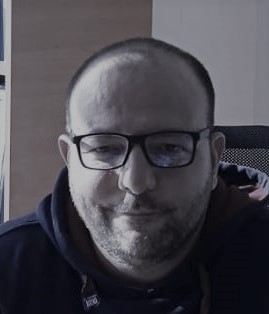
Mustafa Kurt, whose every move on social media is followed with curiosity and whose courage—built upon adversity—inspires a wide audience, stands before us today in all his dimensions. Together, we will explore the story behind this journey that stretches from daring steps taken at great heights to abandoned structures shrouded in mystery.
Karaca Erden: To begin, tell us a little about yourself. Who is Mustafa Kurt?
Mustafa Kurt: I’m Mustafa Kurt. I grew up in Istanbul, but my childhood was spent in mountains, forests, and caves. If adrenaline circulates through an average person like blood, in me it moves like Wi-Fi—everywhere at once. I’m someone with a spirit for adventure and discovery; I enjoy spending time in nature, forests, and abandoned places. I value experience and observation more than calmness. Learning new things and exploring my limits are essential to me. I have a black cat at home; silence, simplicity, and companionship with animals are important parts of my life.
Karaca Erden: You’ve built a large audience through your bold, adrenaline-filled content. How does this attention make you feel?
Mustafa Kurt: When people watch what I do and show interest, it creates an odd feeling. It doesn’t spoil me; it's more like, “So I managed to convey this the right way.” Because what I do is stand up for rooftop culture. It’s not just about climbing rooftops or walking through dangerous places; it’s about owning the culture and creating meaningful work through it.
Having people follow me makes me feel less alone. Supporters motivate me, while critics push me to be more careful and improve. This attention strengthens me but also gives me a sense of responsibility—and I appreciate that feeling.
Karaca Erden: You mentioned that your childhood was spent in mountains, forests, and caves. Was this connected to your family’s lifestyle, or was it entirely your own exploration?
Mustafa Kurt: My family wasn’t particularly nature-oriented, but they never restricted me. I was a curious kid, and because of the films I watched and my imagination, I wanted to climb mountains, wander through forests, and explore caves. No one told me, “Go,” but no one told me, “Don’t go,” either.
So that childhood was shaped partly by the space my family gave me and partly by my own urge to explore. The foundation of what I do today actually comes from those early years.
Karaca Erden: When did you decide to start creating content? Was it a planned goal, or something that developed over time?
Mustafa Kurt: It wasn’t planned at all. A friend of mine was creating content, and when I started tagging along, I thought I might as well share the videos I was filming. When people started showing interest, the rest happened naturally.
I didn’t aim to turn it into a job at first; I just wanted to share my experiences. Over time, viewers’ reactions and support motivated me. So this journey wasn’t the result of a plan—it unfolded on its own.
Karaca Erden: Were there moments early on when you thought, “Maybe I shouldn’t continue”?
Mustafa Kurt: Yes, several times. In the beginning, I often wondered if I should continue. What I do is exhausting and constantly open to criticism. On top of that, we ended up in court more times than I can count. That process really wears a person out.
There were moments when I thought, “Should I just make more ordinary content?” Because when effort, stress, and legal trouble pile up, it drains your energy.
Karaca Erden: Did the growing interest in your work influence your content? Did it change the way you produce?
Mustafa Kurt: I never changed my style. That’s what makes me who I am. I only became more conscious. I started thinking more about the kind of example I might set. The interest didn’t transform me, but it refined me; the essence of my content stayed the same—it just became more planned and controlled.
Karaca Erden: On one hand, you have a loyal fan base, and on the other, you receive criticism. How do you evaluate these two different reactions?
Mustafa Kurt: Those who support me boost my energy, and critics help me become more careful and conscious. Both feed me in different ways—one motivates me, the other improves me. Sometimes the criticism is harsh; most of it comes from people who don’t understand rooftop culture. I respect those criticisms.
Karaca Erden: How do you handle negative comments or harsh reactions?
Mustafa Kurt: When I get a negative comment, I check whether there’s any truth in it. If there is, I take it seriously. But if it’s written just to offend or belittle, I move on. Everyone is entitled to an opinion.
Karaca Erden: What is your relationship with fear? Do you ever think, “Maybe I shouldn’t do this,” when faced with something dangerous?
Mustafa Kurt: Fear and I get along pretty well. But sometimes I think there’s something wrong with my fear hormones; I can stay calm in places where most people’s legs would shake. Still, there are moments when I think, “Maybe I shouldn’t do this.” I stop, weigh the risks, and if it doesn’t feel right, I don’t do it. I like courage, not recklessness.
Karaca Erden: What is the most unforgettable moment you’ve experienced while filming?
Mustafa Kurt: Once, we climbed to the roof of a 50-story skyscraper. The last three floors were accessible only via a hidden elevator. When we reached the top, we found an area that looked like an empty auditorium with X-ray scanners at the entrance. No one was there; it was so mysterious that we left without touching anything. I still wonder about that place.
Karaca Erden: Do you have someone who inspires you—on social media, in sports, or elsewhere?
Mustafa Kurt: Jackie Chan. I grew up watching his films, and he’s still someone who inspires me. His courage, creativity, and dedication to pushing limits always impressed me.
Karaca Erden: Your followers often call you “brave, crazy, reckless,” while others warn you not to continue doing dangerous things. What do you think of these opposing views? What would you say to someone who wants to do what you do?
Mustafa Kurt: All three labels fit pretty well. Anyone reasonable wouldn’t do what I do. To young people who want to try extreme things, I say: These videos are filmed by a professional madman—don’t try this yourselves.
We have a parkour background; everyone who does this kind of work has experience and training. Nothing is as easy as it looks. If you’re going to attempt it, do it with experienced people who have an athletic background. If you rush in without preparation, you take serious risks.
Karaca Erden: Some argue that your content encourages dangerous behavior, especially among young viewers. How do you respond to that?
Mustafa Kurt: When I read comments saying I’m a bad influence on kids, sometimes I feel like they’re talking about someone trafficking illegal substances in back alleys. My only intention is to motivate people who like extreme things or who have a fear of heights.
I’m not a digital babysitter; I can’t virtually supervise thousands of children. Kids picking up bad habits isn’t caused by content creators—it’s caused by adults who fail to monitor and guide them. I perform dangerous things with professional experience, and I always include warnings not to imitate. The rest is the responsibility of families.
Karaca Erden: What does your family and close circle think about your work?
Mustafa Kurt: My mom gets the angriest—she scolds me after every video. To get out of trouble I tell her, “Mom, those aren’t real, AI makes them,” and she believes it. I don’t really care what others think. Supporters are appreciated; those who worry are justified. But the harshest criticism always comes from my mother.
Karaca Erden: What does your preparation process look like before filming? Do you have a physical or mental routine?
Mustafa Kurt: I work on strength and conditioning in my free time; other than that, I have no special routine.
Karaca Erden: Do you film with a team, or do you usually do everything on your own?
Mustafa Kurt: Sometimes I go alone, but most of the time I’m with friends—they help with both motivation and filming. They’re basically my team.
Karaca Erden: Are you considering more ambitious or larger projects in the future? Are you working on anything now?
Mustafa Kurt: I’m currently producing content for my YouTube channel—mostly urbex-themed videos. We also have plans to travel abroad for rooftop content.
Karaca Erden: If you had to describe yourself in three words, what would they be—and why?
Mustafa Kurt: Brave, curious, faulty.
Brave, because I go where most people hesitate to look.
Curious, because I can’t help wondering, “Can I climb that too?”
Faulty, because… well, my military health report literally said “faulty.” Let’s be honest—no normal person does the things I do.
Karaca Erden: Finally, what would you like to say to young people watching you—those who want to follow their dreams?
Mustafa Kurt: Whatever you do, do it with your own courage, not someone else’s. A dream should scare you at least a little… If you’re scared, you’re on the right path. Mine is just an example; the real step is always yours.
Mustafa Kurt’s story is more than that of a young man sharing daring content online; it is a source of inspiration for anyone forging their own path, pushing their limits, and confronting their fears. Growing up surrounded by nature and guided by curiosity, Kurt doesn’t just share his experiences—he highlights the value of courage, responsibility, and determination.
While producing content in unconventional fields like rooftop culture and urbex, the challenges he faces, the way he handles criticism, and the sources of his motivation offer valuable insights for young people and dreamers. Despite the risks involved, he emphasizes that proper training, experience, and knowledge are essential. Success comes from preparation, awareness, and learning—not from reckless imitation.
His journey shows that carving one’s own path requires both passion and discipline; and for those willing to take bold steps, his experiences serve as a reminder that courage must always be paired with responsibility.
Yorumlar